
Synthetic leather has come a long way. The finishes are more convincing, the textures more detailed, and a lot of sellers don’t go out of their way to advertise what they’re actually selling. If you’re spending real money on something that’s supposed to be real leather, it helps to know how to spot fake leather before it’s sitting in a shopping bag on your way home.
The good news is that there are four straightforward tests you can run on any piece of leather — no special tools needed. Used together, they catch most fakes reliably.
The quick version: Check the label (real leather says so — look for “full grain” or “top grain”), study the grain (real leather is irregular; fake repeats perfectly), press it (real leather wrinkles like skin; synthetic springs back), and smell it (real leather has a natural organic scent; fake smells like plastic). Run all four — no single test covers everything.

1. Check the Label
Start here. If the item is genuine leather, whoever made it will say so — clearly. The words to look for are “full grain leather” or “top grain leather.” These are the two highest grades, cut from the outer layers of the hide, and any maker worth buying from will use those terms specifically.
There’s one common trap worth knowing about: a label that says “genuine leather.” This sounds reassuring, but it’s technically the third grade — made from the lower layers of the hide, after the full grain and top grain have been split off. It is real leather, but it’s the lowest quality of the three. It won’t age well, it won’t develop a patina, and it will start peeling or delaminating well before a full grain or top grain piece would. If quality matters to you, “genuine leather” alone is not the reassurance it appears to be.
If the label says “man-made material”, it’s synthetic — most likely polyurethane (PU) or polyvinyl chloride (PVC). If the label says nothing at all about what the material is, treat that as a red flag. Makers of real leather goods don’t stay quiet about it.
Price is also worth factoring in. Real leather has a production cost it simply can’t drop below — quality hides, skilled labour, and hardware all have a floor. If a “leather” bag or jacket is priced well below what you’d expect, that’s worth questioning before you buy.
2. Look at the Surface Up Close
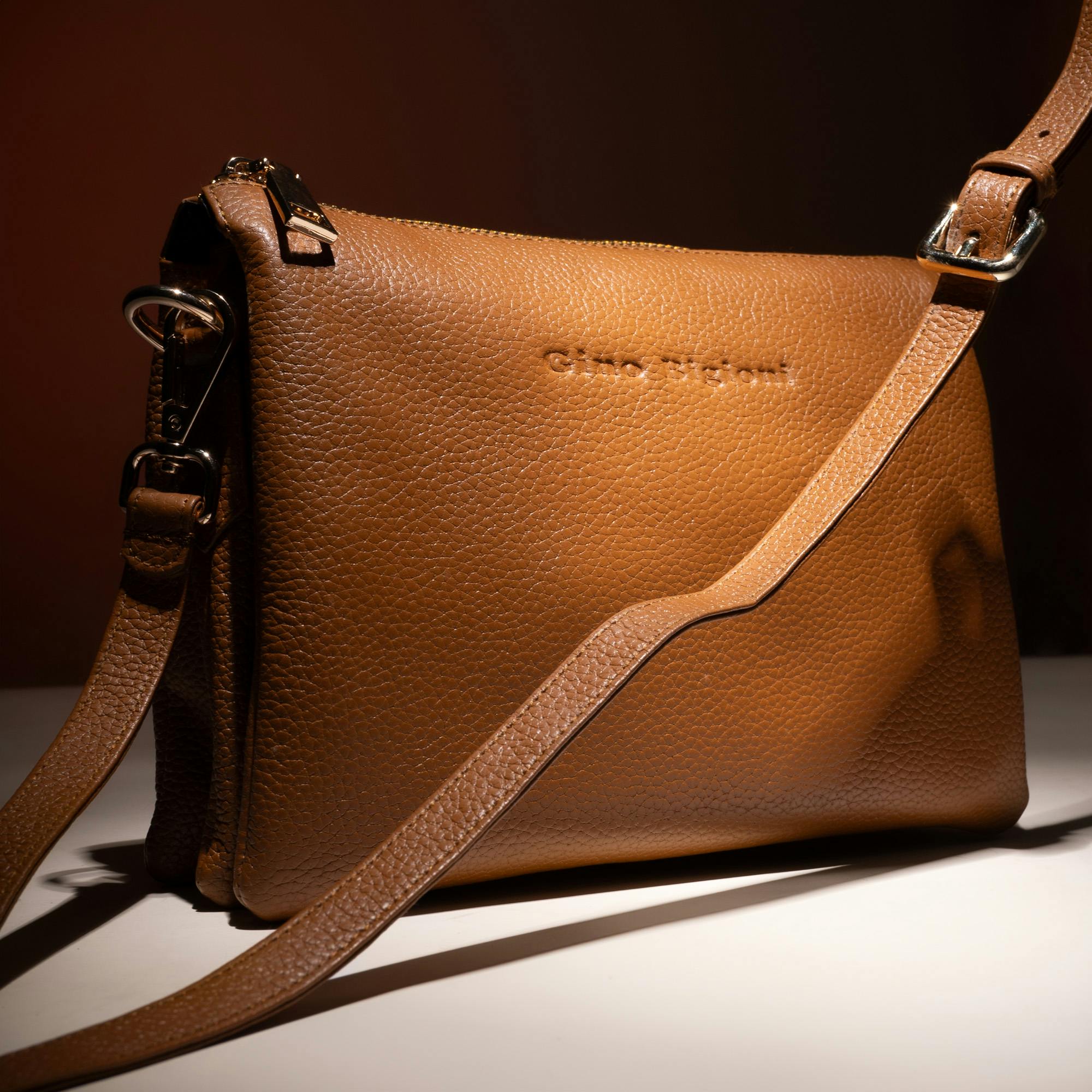
Real leather comes from animal skin — and like skin, it’s never perfectly uniform. When you study the surface of genuine leather, you’ll see slight variations in the grain, occasional small blemishes, and sometimes a faint healed mark or scar from the animal’s life. These imperfections are actually a sign of quality. They mean you’re looking at a real hide, not a manufactured sheet.
Fake leather is produced by embossing a grain pattern onto a plastic or fabric base. The result is a texture that looks convincing at a glance, but doesn’t hold up to close inspection. The giveaway is repetition — a stamped pattern will repeat at regular intervals across the surface. Scan a larger area slowly and look for the pattern cycling back. Once you spot a repeat, the material is synthetic.
Check the back of the material too, if you can. Real leather has a fibrous, suede-like underside. Synthetic leather usually shows a fabric backing or a smooth plastic layer underneath.
3. Press It and Feel the Surface
This test takes about two seconds and is one of the most reliable. Press your thumb firmly into the surface of the leather and hold it for a moment.
Real leather will stretch and wrinkle slightly around the pressure point — the same way skin does when you press it. When you release, it settles back naturally. The surface also has a slight warmth to it; real leather absorbs your body heat the way a natural material does.
Fake leather behaves differently. It feels cold and uniformly smooth to the touch. When you press it, it simply depresses and springs back like foam or plastic — without the stretch or the skin-like wrinkling. That distinction alone separates most real hides from most imitations.
4. Smell It
If you’ve spent any time around real leather — a good saddle, a quality bag, a well-made pair of shoes — you know the smell. It’s distinctive, warm, and slightly earthy. That scent comes from the tanning process and the natural fibres of the hide, and no manufacturing process has managed to replicate it convincingly.
Synthetic leather smells like plastic, or has a faint chemical odour. Sometimes it has no noticeable smell at all. If you hold a piece of “leather” close and smell plastic rather than hide, it’s synthetic. Your nose is actually one of the more reliable tools you have for this.
A Note on the Burn Test
You may have come across the advice to hold a flame to a hidden spot — real leather chars and smells like burning hair; synthetic melts, bubbles, and smells like plastic. It works. We don’t recommend it. The item gets damaged either way, and the four tests above catch most fakes without destroying anything. Save that one as a last resort.
Frequently Asked Questions
Does “genuine leather” mean good quality?
No — and this is one of the most common misunderstandings in leather shopping. “Genuine leather” is real leather, but it’s the lowest of the three main grades. It’s made from the inner layers of the hide left behind after full grain and top grain are removed. It lacks durability, won’t develop a patina, and tends to peel over time. If quality matters to you, look for “full grain” or “top grain” on the label.
What is fake leather actually made of?
Most synthetic leather is made from polyurethane (PU) or polyvinyl chloride (PVC) — essentially plastic sheets that have been textured and finished to look like leather. It goes by various names in marketing: vegan leather, faux leather, leatherette, pleather. The material and the production process vary, but it’s plastic-based in all cases.
Is bonded leather real leather?
Barely. Bonded leather is made by grinding up leather scraps and off-cuts, mixing them with polyurethane binders, and pressing the result onto a fibre backing. It contains some real leather content, but the amount varies and there’s no standard. It tends to peel and crack relatively quickly, and it doesn’t age like genuine full grain or top grain leather does.
How do I check a leather jacket specifically?
The same four tests apply — label, grain, feel, smell. For jackets, also check the cut edges at cuffs and hems. Real leather has a rough, fibrous edge. Synthetic leather often shows a clean, sealed edge or a fabric backing at the cut. Check the lining seams too; the way the material behaves where it’s folded and stitched can reveal a lot.
Final Thought
None of these four tests is foolproof on its own — but together, they give you a clear picture. If the label doesn’t say full grain or top grain, the grain pattern repeats, pressing it feels like foam, and it smells like plastic, you already know what you’re looking at. Real leather passes all four. Most fakes fail at least two.
Once you know what to look and feel for, spotting fake leather takes about sixty seconds. That’s time well spent when you’re paying for the real thing.